
The Term Based Data Lineage diagram of a Term shows all the dependencies of a Term with Source and Target Terms in other Model Objects with both top-down and bottom-up approaches:
- You can see all the predecessor Terms (related to the Term with a Mapping or to the Model Object of the Term without a mapping)
- You can see all the successor Terms (related to the Term with a Mapping or to the Model Object of the Term without a mapping)
It also displays the dependent Terms from Linked Projects Model Objects.
Show Term Based Data Lineage
To display the Term Based Data Lineage of a Model Object, access the Term Mapping overview page for a Model Object:
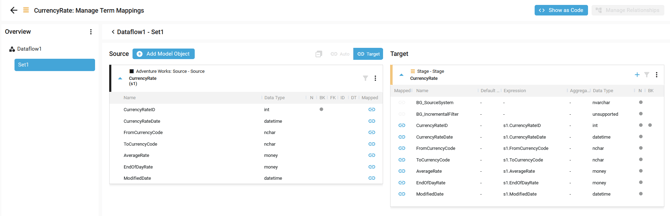
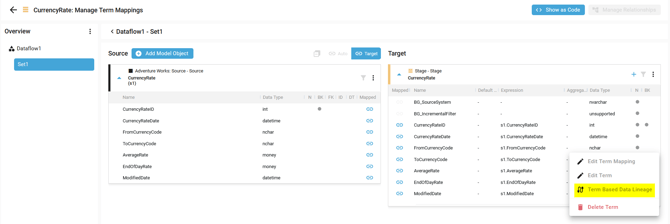
Click on the Context menu of a Term and select the Term-Based Data Lineage menu:
If your license plan doesn't include the term-based data lineage view advanced feature:
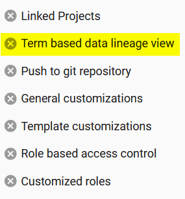
You can't access the Term-Based Data Lineage:

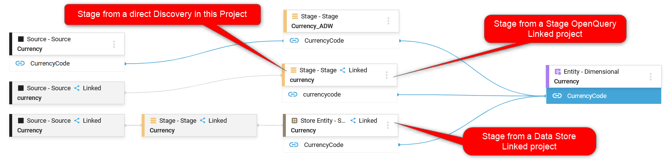
The Term-Based Data Lineage is displayed:
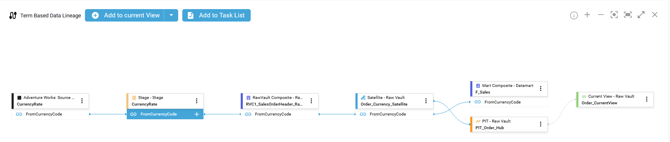
If the dependent Terms are coming from Linked Project Model Object(s), they are also displayed, for example, here:
From here, you can:
- Add in a Dataflow Modeling View, all the Model Objects displayed in the Data Lineage diagram:
- Into the current View:

- Into another View:
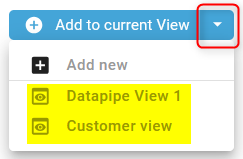
- Into the current View:
- Create a new Dataflow Modeling View and add to it all the Model Objects displayed in the Data Lineage diagram:
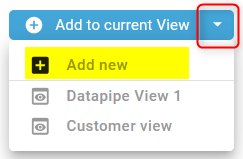
- Add all the Model Objects displayed in the Data Lineage diagram to the Task List:

- Display the legend of the lines by flying over the information icon:
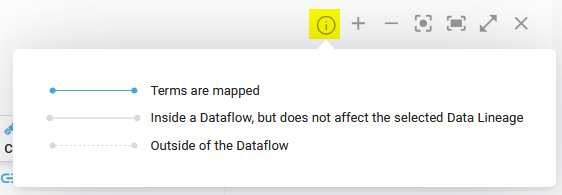
- Move a Term-Based Data Lineage element with a Drag and Drop:

- Zoom in on the Term-Based Data Lineage diagram:

- Zoom out on the Term-Based Data Lineage diagram:

- Center the Term-Based Data Lineage diagram (if you moved the canvas itself):

- Fit the Term-Based Data Lineage diagram to the screen

- Maximize / Minimize the Term-Based Data Lineage diagram view:


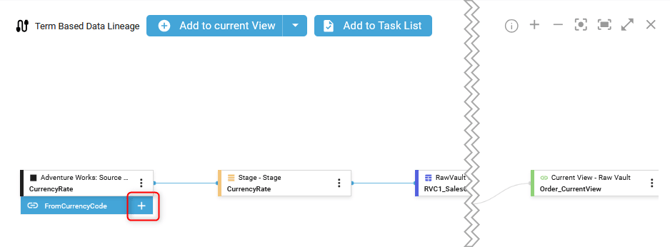
- Map a Term via data lineage:
- Close the Term-Based Data Lineage diagram:

- Display the action menu for each Model Object. It is the same as in the Modeling overview.
Demonstration video